
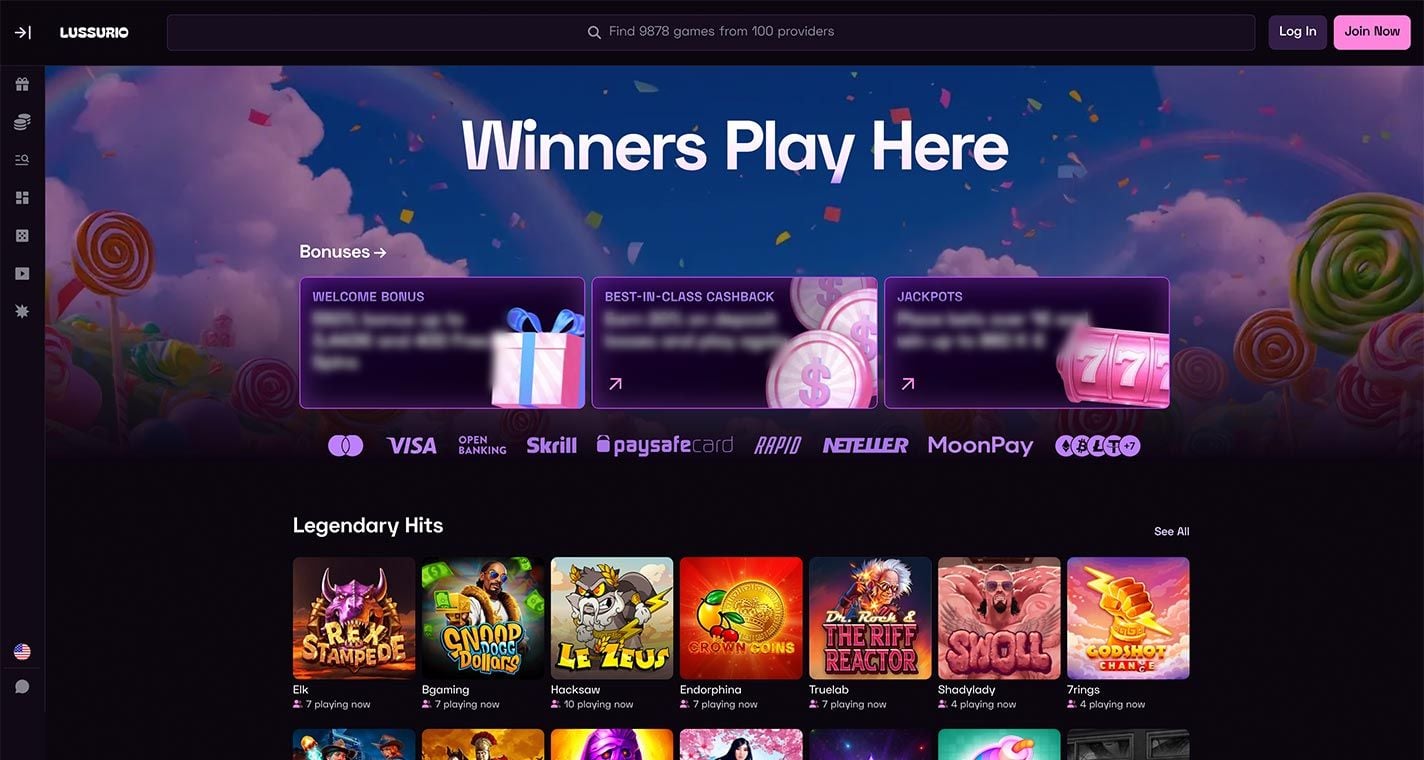
Mobile browsing has become the practical way to compare and explore casino lussurio from a Canadian smartphone or tablet. A browser-based casino can be convenient, but a small screen also makes it easier to overlook terms, confuse a website with a native app, or use an unsecured connection. The safest approach is to treat mobile access as a browsing and account-management task first, then assess whether the experience suits your device, habits and expectations.
What should a mobile visitor check first?
Begin with the browser rather than assuming that every casino site offers a downloadable application. The available information describes an instant-play website designed for modern smartphone and tablet browsers. That means users should be able to view the casino catalogue, access live content, review promotions and reach account functions without needing a desktop computer. It does not, however, prove that a dedicated iOS or Android application is available.
This distinction matters because some directories use “mobile app” as a broad label for a mobile-friendly website. A genuine native application normally appears through an official Apple App Store or Google Play listing, while a browser service opens through Safari, Chrome or another mobile browser. If no verifiable store listing is provided, avoid downloading files from advertisements, unofficial app pages or messages claiming to offer a special installation.
Before exploring further, check that the page loads properly over a secure connection and that the address is displayed correctly. Test whether menus, game filters, account controls and support options remain usable in portrait mode. A page that technically opens on a phone may still be awkward if buttons are too close together, text is difficult to read or important terms disappear behind expandable panels.
How does browser access differ from an installed app?
A browser-based service has one immediate advantage: it avoids occupying storage space and does not require an operating-system installation. Updates are generally handled on the website, so the user does not need to monitor a separate app version. This can be useful for people who switch between a phone, tablet and computer or who prefer not to install gambling-related software on a personal device.
The trade-off is that the mobile browser experience depends more heavily on the device, browser settings and connection quality. Battery-saving modes, blocked cookies, private browsing settings or aggressive content filters can interfere with sign-in sessions, payment pages or account controls. A weak connection may also cause a live table or interactive game to reload, although a short demonstration is not evidence of a game’s long-term performance or fairness.
Installed applications can offer a more consistent interface, but an app should only be treated as genuine when its source is clear. Check the developer name, recent update information, permissions and store URL before installing anything. Never provide account credentials to an application obtained from a pop-up or an unknown file-sharing page. When the official material does not clearly establish a native app, browser access is the more defensible assumption.

Which mobile settings improve privacy and account security?
Use a current operating system and a supported browser, then install updates promptly. Security patches help address weaknesses that can affect saved passwords, browser sessions and personal information. A screen lock, device encryption and biometric protection add useful barriers if a phone is lost. Avoid saving account credentials on shared devices, particularly where other people can access the browser’s password manager.
Public Wi-Fi deserves extra caution. A hotel, café or airport network may be convenient, but users cannot always confirm who operates it or how well it is protected. If account information or payment details must be reviewed, a trusted private connection is preferable. The Canadian Centre for Cyber Security provides general online-security information that can help users assess passwords, devices and suspicious communications.
Use a unique, difficult-to-guess password and do not reuse it for email or banking. Be wary of messages requesting identity documents, payment details or urgent password changes, even when the branding appears familiar. Reach the service through the address you already trust rather than a link in an unexpected message. Sign out after using a shared device and review browser permissions periodically, especially for notifications and location access.
How can mobile users read terms without missing important details?
Small screens encourage quick scrolling, but mobile users should slow down before accepting an offer or changing an account setting. Open the full terms instead of relying on a promotional headline. Look for the qualifying deposit, any maximum amount, wagering calculation, expiry period, eligible games and the effect of withdrawing funds. If the wording is unclear, do not assume that a bonus or free-spin offer has universal conditions.
Account and payment terms also deserve attention. The available information indicates that currency, payment method and jurisdiction can affect displayed thresholds and processing conditions. A Canadian-facing page may show amounts in CAD, but that does not mean every method has the same minimum, maximum or delivery time. Read the cashier screen carefully and retain confirmation emails or screenshots of important transactions.
Verification requirements are particularly relevant on a phone because documents may be photographed and uploaded from the same device. Use clear, unedited images and submit them only through the account’s recognised verification route. Requests can include identity, address or payment-ownership evidence, and reviews may take longer when extra checks are required. Keep copies of submitted documents and avoid sending sensitive files to an unverified email address.
When is mobile browsing convenient—and when is it not?
Mobile access is convenient for checking a game catalogue, reviewing an account notice, reading promotion terms or contacting support while away from a desktop. A responsive interface can also make it easier to switch between categories, including slots, table games and live-dealer content. Convenience should not be confused with suitability, however: a phone can make impulsive decisions feel effortless.
Consider using the available account controls before beginning a session. Listed tools include deposit, wagering, loss and time limits, along with reality checks, cooling-off periods and self-exclusion. The exact location and operation of each control should be confirmed in the account area. If a setting is difficult to find on mobile, support can be asked for instructions before funds are added or play begins.
A larger screen may be preferable for reading lengthy terms, checking transaction records or comparing several pages. Mobile users should pause if the display is cramped, the connection repeatedly drops or they feel rushed by a promotion. Do not treat gambling as income, and never increase spending to recover losses. A phone is simply an access tool; it should not remove the time and attention needed for a careful decision.
Mobile browsing questions Canadians commonly ask
Is a mobile-friendly website the same as a mobile app?
No. A mobile-friendly website opens in a browser, while a native app is installed through an official app store. If a recognised iOS or Android listing cannot be verified, treat the service as browser-based. Avoid unofficial downloads, even when they promise faster access or special mobile-only benefits.
Can I use public Wi-Fi for mobile casino browsing?
Reading general information may be low risk, but signing in or entering payment details on public Wi-Fi is less advisable. Use a trusted private connection where possible, keep the device updated and check that the address is correct. Never ignore browser security warnings or unexpected requests for personal information.
What should I do if the mobile page does not work properly?
Update the browser, check the connection, close unnecessary tabs and try a supported alternative browser. Do not repeatedly submit a payment or form if the page freezes. Record any error message and contact the operator through its recognised support channel. Keep transaction evidence until the issue is resolved.